A zip fly and a drawstring can exist in the same pair of linen pants. So can elastic and a cord. The familiar choice between tailored trousers and pull-on pants is therefore less clear-cut than a shopping filter may suggest.
Choose the waist construction by the job you need it to do: stay in place, accommodate ordinary changes in seated position, make dressing straightforward, or provide the finish you want beneath a top. This comparison separates those functions so that the closure name does not have to stand in for the whole garment’s fit.
Quick Answer
Choose an elastic waist for a changing opening, a drawstring for adjustable cinching, and a fixed fastening when you prefer a more defined closure and fit. Some linen pants combine these features. Check the actual opening, band tension, fly and belt loops for the selected model. No waistband mechanism guarantees comfort, and elastic at the waist does not establish stretch in the leg fabric.
As an Amazon Associate I earn from qualifying purchases.
Identify the mechanism before judging the appearance
An elastic band changes its opening as it extends and relaxes. A drawstring adjusts the opening by gathering or securing fabric with a cord. A fixed waistband closes at a defined fastening, though a garment with a fly may also include hidden elastic or an internal drawstring. These are construction distinctions rather than style rankings. A neat-looking front may conceal adjustment, and a casual-looking cord may be the main means of support.
Read the selected product’s details instead of assuming the photograph reveals every mechanism. Look for whether the cord is functional, whether elastic runs around the entire waist or only part of it, and whether the fly opens. If the listing does not establish those details, keep them as questions. A title containing “button up” does not automatically establish belt loops, and “pull on” does not provide the relaxed width or usable adjustment range.
| Construction | Useful capability to check | Possible tradeoff to assess |
|---|---|---|
| Elastic | Opening changes without retying a cord | Band tension, rolling and gathered appearance |
| Drawstring | Wearer can alter the effective waist opening | Knot bulk and the amount of fabric gathered |
| Fixed fastening | Defined closure and waistband position | Less adjustment unless another mechanism is included |
| Hybrid | Combines an opening or fly with another adjustment | More details to verify rather than one simple category |
Compare four verified constructions
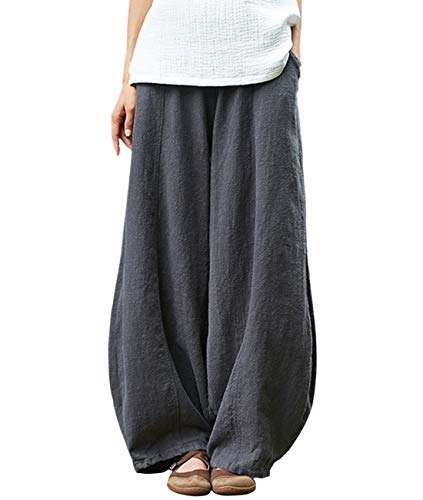
The IXIMO Women’s Elastic Waist Wide Leg Linen Pants title identifies elastic and a wide leg. It does not give band tension or establish an adjustment cord. The Duyang Women’s Cotton Linen Drawstring Palazzo Pants title explicitly includes both elastic waist and drawstring wording. That combination supplies two construction clues, but it does not tell us how the band feels or how much gathering a particular wearer will need.
The Mariyaab Men’s 9505B Pure Linen Button Closure Pants title establishes a button closure and an explicit 100% linen claim. It does not establish whether hidden adjustment exists. The Bilitry Men’s Zip Fly Pure Linen Pants title identifies a zip fly and hidden internal drawstring, alongside mid rise and a straight leg. That is a verified example of a hybrid arrangement, not evidence that every zip-front linen trouser has the same flexibility.
Elastic: assess the band in its ordinary working position
An elastic waistband has to work while putting the garment on and while wearing it. Those are different checks. A pull-on opening must pass over the relevant body area without forcing seams or overstretching the band, then hold the pants comfortably at the chosen position. Reaching a large extended opening does not prove that the relaxed band will apply comfortable tension during a long seated period.
Sit, stand and reach naturally. Notice whether the band rolls, migrates or presses at a particular edge. A broad smocked section can feel different from a narrow encased elastic, but the title cannot establish which you will prefer. If a band is uncomfortable, a larger size may change the whole trouser as well as its waist. Check whether you need a different tension or construction rather than assuming more circumference is the only available solution.
Drawstring: decide how much adjustment you want to manage
A functional drawstring can help set the opening where you want it, especially when the desired waist circumference differs from the garment’s ungathered width. Tighten it only enough to secure the trousers comfortably, then inspect the resulting gathers. If fabric bunches in a place you dislike or the knot creates bulk beneath a fitted top, the adjustment has an aesthetic cost. That cost may be entirely acceptable for a casual outfit and unwelcome in another.
Try untying and retying the cord in the way you would during ordinary wear. Decide whether that routine suits you. A cord that needs constant correction to keep the garment in place may be compensating for a size or rise mismatch. It also cannot provide missing thigh room. The waist-gap guide explains when gathering is a useful response to waist-to-hip differences and when another pattern is worth seeking.
Fixed fastening: check the opening and the settled fit
A fly and button can make the dressing opening different from that of a pull-on garment. Once closed, however, the waistband still needs to fit at its intended position without depending on strain at the fastening. Sit in the trousers and check the front and back together. A smooth standing appearance does not establish comfortable seated fit, especially if the band is placed where your body circumference changes with posture.
Look for any actual adjustment the product describes. Side tabs, elastic sections and internal cords should only enter your comparison when the selected listing establishes them. If they are absent, judge the fixed arrangement on its own merits. Some wearers prefer that defined fit and a less gathered appearance. Others want more everyday adjustment. Neither preference proves that the corresponding waist style is inherently better quality or more appropriate for every setting.
Pocket contents change the support question
Assess the waistband first with empty pockets, then with the small items you normally carry. If adding a phone pulls one side downward, note whether the band needs ordinary adjustment or whether the garment’s fit changes substantially. This practical check does not establish a pocket load rating or guarantee security. It simply shows whether the waist construction supports your expected use comfortably.
If you normally carry belongings in a bag, do not reject a pair for failing a pocket routine you never use. If you rely heavily on pockets, do not approve the waist only while the trousers are empty. The same drawstring may feel satisfactory in one routine and require more adjustment in another. Match the comparison to your day rather than asking a closure category to promise universal stability.
A tucked shirt introduces another layer at the band
Try the top you expect to tuck in before finalizing your preference. A smooth band may create the defined edge you want, while gathers may remain part of an intentionally relaxed look. A drawstring knot may sit underneath the shirt or remain visible, depending on the actual design and how you wear it. There is no universal ban on tucking into elastic-waist linen pants; the result depends on the outline you want and the space available.
Consider access as well as appearance. If you need to adjust an internal cord, check how that works with the intended top in place. A wide band may occupy more of the torso than a narrow one, making rise and waistband width relevant together. For where the band should sit, use the rise guide. Closure choice cannot resolve an upper garment that settles at the wrong position for you.
Belt loops are a separate feature to verify
A fixed fastening does not imply that a belt can be used. Confirm loops on the exact product before planning to rely on one. When loops are present, a belt can fine-tune fit or contribute to the outfit, but substantial cinching can gather excess fabric rather than remove it. If you want a smooth waist, check that the trousers themselves are close enough to your preferred dimensions to deliver that finish.
A belt worn over a top is also different from a belt supporting the waistband through loops. Do not treat a styling photograph as proof of the garment’s construction. If the pants need a belt to remain usable and you do not want to wear one, compare another size or waist arrangement. The accessory should support your intended outfit, not conceal an unresolved purchase requirement.
Keep fabric stretch out of the waistband shortcut
Elastic at the waist establishes nothing about the leg fabric’s ability to stretch and recover. A cord changes the opening without changing the cloth covering the seat or thighs. If your main concern is movement through those areas, inspect garment dimensions and any explicit stretch-fabric claim separately. The stretch and bagging guide covers that distinction in more depth.
This separation is especially useful when a product description uses broad comfort language. A flexible closure may be convenient while the leg remains too close for your needs. A fixed band can coexist with a roomy, comfortable upper leg. Choose the mechanism that handles the waist well, then confirm the rest of the fit through the first-try-on checks. One successful component does not approve the whole garment.
FAQs
Can zip-front linen pants also have a drawstring?
Yes. The verified Bilitry listing explicitly describes a zip fly with a hidden internal drawstring. Treat that as information about the exact model. Do not assume every zip-front or mid-rise listing includes the same internal adjustment.
Is smocking the same thing as a loose waistband?
No. Smocked construction describes a gathered section, not a guarantee of low tension or a particular size. Check the selected garment’s dimensions and how the band feels while seated. Its appearance alone cannot establish comfortable pressure for you.
Can I replace a missing belt with a tighter drawstring?
Only when the actual pants have a functional drawstring that provides the adjustment you need without unwanted bunching or discomfort. Belt loops and cords are separate construction details. Do not assume one exists because the other appears in a related listing.
Final Verdict
Choose the waistband mechanism around your daily use: how you dress, sit, carry small items and wear your top. Elastic, drawstring, fixed and hybrid designs each deserve a construction-specific check. The right one holds the trousers comfortably at the intended position while preserving the upper and leg fit you chose.