The knees look roomier after a day at a desk, yet the waistband still feels the same. Or the waistband becomes easier to pull on while the thighs remain restrictive. These changes can look like one problem called “stretching out,” but they may involve different parts of the trousers.
Before deciding to size down, wash more often or replace the pair, identify where the change occurs and whether it remains when the garment has rested. That observation is more useful than a blanket rule about how all linen behaves.
Quick Answer
Linen pants can look looser or develop knee and seat shaping during wear, but that is not the same as verified stretch fabric with reliable recovery. Separate leg-fabric changes from waistband elastic and fit problems. Compare the pair before and after ordinary wear, avoid buying an initially restrictive size in anticipation of growth, and follow care instructions rather than using heat as a fit correction.
As an Amazon Associate I earn from qualifying purchases.
Map the change before naming it
| Where you notice it | First distinction | Avoid assuming |
|---|---|---|
| Knee | Fold or local shaping versus an opening or damaged thread | A smaller size will prevent it |
| Seat | Original excess room versus a change after sitting | All fullness developed during wear |
| Waist | Adjustment or elastic behavior versus leg-fabric change | The whole garment grew |
| After laundry | Measurement change versus daytime appearance | More heat will provide a controlled correction |
Lay the pants out in their normal shape and identify the affected area. Is there a rounded knee shape, extra fullness at the seat, a waistband that no longer holds where you want it, or a leg that seems twisted? These observations lead to different questions. One broad label can hide the distinction between local shaping and a closure problem.
Consider when you first notice it. A change immediately after sitting is different from one that appears after laundering. A pair that already feels loose at the first try-on also presents a different issue from one whose shape changes over time. Keeping the timing clear prevents an attempted solution aimed at the wrong cause.
You do not need to diagnose the textile scientifically to make a useful record. A front and side photograph under similar conditions, plus a note about where the cloth looks different, is enough to begin. Avoid pulling the fabric firmly for a demonstration; that creates a new stress instead of documenting ordinary wear.
Stretch, ease and recovery answer different questions
Stretch refers to the cloth extending under force; recovery concerns how it returns after that force is removed. Ease is the extra room built into the garment relative to the wearer. A roomy trouser can permit movement without stretch, while a stretchy trouser can still feel wrong if its rise or shape does not fit you.
An elastic waistband introduces another distinct feature. It can expand around the waist without establishing that the leg fabric stretches similarly. This distinction is especially important with titles that combine “stretchy” and “drawstring waist.” Determine whether the claim addresses the fabric or only the closure.
The FTC’s fiber-label guidance supports looking for actual content information rather than deriving it from a design feature. For the fiber’s role, CottonWorks explains how spandex adds stretch to apparel. A disclosed amount still does not supply a measured stretch range or recovery result for the finished pants. Check those separately from the ingredient list.
What the verified product wording lets you compare
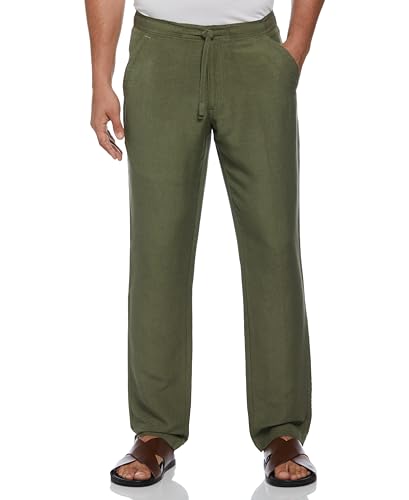
Cubavera Men’s Stretch Linen Blend Drawstring Pants explicitly include “stretch fabric” in the retrieved title. That makes them a relevant candidate when a fabric-stretch claim matters. The evidence does not give us an elastane percentage, direction of stretch or measured recovery, so it would be inaccurate to assign any of those details.
Amazhiyu Men’s Pure Linen Loose Drawstring Pants explicitly state 100% linen and a loose drawstring design. Those words support investigating an all-linen garment with a roomier listed cut. They do not establish the same fabric behavior as Cubavera’s stretch-labeled model, even though both have adjustable-looking waist designs.
IXIMO Women’s Linen High Waist Drawstring Joggers provide a third useful design example. A jogger silhouette and drawstring are visible buying categories, but the title does not establish dependable stretch through the knees. Compare the leg shape and dimensions rather than assuming that a casual style behaves like knit lounge pants.
Baggy knees need a fit check before a laundry fix
Knees bend repeatedly during ordinary seated wear, so this is an area worth observing when the appearance changes. Check whether the original fit gave you comfortable room when sitting or whether the cloth became taut across the knee. A very close fit may create a different wearing situation from a relaxed leg, and switching size is not the only way to change that relationship.
Look at the whole leg shape. A narrow knee area can coexist with a loose waistband, making “size down” an especially poor automatic response. You may need a different cut that gives room where you bend without adding unwanted volume everywhere else. The silhouette guide compares these choices.
Do not assume that every rounded knee appearance is damage. First distinguish a temporary fold or local shape from a persistent change you find unacceptable. Let the trousers rest in their normal hanging or supported position, then reassess. Resting is an observation step, not a promise that the fabric will return to an original measurement.
Seat fullness can be a separate purchase-fit issue
If extra fabric collects below the seat from the beginning, the garment may have more volume or a different rise than you want. That is not evidence that it stretched out during the day. Compare the first try-on with the later appearance before assigning a cause.
If the cloth changes mostly after sitting, inspect where it was under tension. A comfortable standing fit does not establish a comfortable seated fit. The waistband position, back rise and available seat room work together, and a size label alone cannot tell you which element needs attention.
The fit diagnosis guide owns the full try-on workflow. For a wear-change problem, use that workflow to answer one focused question: did this pair begin with enough room in the area that now looks different? If not, a new silhouette may be a more sensible purchase than a smaller version of the same pattern.
When only the waistband loses its hold
A waistband that slips is not automatically evidence that the trouser legs grew. Check whether the drawstring adjustment changed, whether the waistband sits at a different position or whether the elastic behaves differently from when you first wore the pair. Keep those observations separate from the shell fabric.
If you can secure the drawstring comfortably, reassess the fit with the waistband in its intended place. A shifted waist can alter the apparent rise and length, making the whole garment look looser even when the main change is positioning. Do not tighten it to compensate for an unsuitable fit through the rest of the trousers.
Persistent loss of waistband function may require a garment-specific repair assessment. Construction determines whether elastic is accessible or replaceable. The waist alteration guide addresses that decision. A hotter wash is not a controlled substitute for evaluating the elastic or closure.
Compare like conditions in a short wear record
Choose a few fixed observations: how the knees look before dressing, how the seat looks after normal sitting and whether the waist stays in place. Photograph the same views with similar lighting and pose. If you use measurements, measure the garment consistently without stretching it and record exactly where you measured.
Add the care history only when relevant. “Looked roomier after several hours sitting, before washing” is a clearer note than “got bigger.” “Leg length changed after the first permitted wash” belongs to a different investigation from day-to-day knee shaping. The shrinkage guide handles those laundering-related measurement questions.
Record where the change appears and when you first notice it: at the waist after walking, behind the knees after a seated afternoon, or through the seat over several wears. Compare the same pair in the same care state. That pattern helps you decide whether to change the closure, the upper fit or the leg shape next time.
Avoid correction methods that create a second problem
Do not buy an initially restrictive pair because you expect it to grow into a comfortable fit. The amount and location of any change are not guaranteed, and pressure through the seat or thigh is already useful evidence that the garment may be unsuitable. Fit should work before you depend on an uncertain change.
Do not use extra heat to shrink one part of the trousers deliberately while assuming every other part will remain unchanged. The FTC’s care-label guidance concerns the complete garment and its components. Follow the specific instructions rather than using a fiber-based experiment to alter fit.
Likewise, repeated washing solely to restore a preferred silhouette is not automatically a good ownership routine. If you dislike the way the trousers look after ordinary wear, choose a construction better suited to that expectation. A product that requires constant corrective effort may simply be the wrong match, even if it is otherwise well made.
Choose the next pair from the problem you observed
For restrictive bending, prioritize appropriate leg and seat room, then investigate verified fabric-stretch information if desired. For an unstable waist, compare closure designs and actual waist measurements. For a dislike of visible knee shaping, consider a different silhouette and set realistic expectations about how woven trousers look after sitting.
Keep your shortlist specific. A Cubavera model with an explicit stretch-fabric claim answers a different question from an Amazhiyu all-linen loose drawstring design. Neither deserves a promise of perfect recovery based on title wording. Use the known distinctions to select candidates, and assess the finished garment against the actual behavior that matters to you.
FAQs
Will sizing down stop linen knees from bagging?
Not reliably. A smaller pair can increase tension where the knee bends while creating other fit problems. Check whether the original leg shape suits you and compare a different cut before treating size reduction as a universal fix.
Does a drawstring mean the pants will hold their original shape?
No. A drawstring adjusts the waist; it does not establish recovery in the seat or legs. If shape retention is important, look for specific fabric information and evaluate the actual garment rather than transferring a closure feature to the whole pair.
Should I wash after every wear to make the knees look new?
Do not assume washing is required solely for that purpose. Follow the care instructions and decide cleaning needs from the garment’s condition. If ordinary wear consistently produces an appearance you dislike, a different fit or construction may be more useful than additional washing.
Final Verdict
Locate the change first: knee, seat, waistband or a shift after laundering. Then choose the response that matches it. A suitable cut and clear fabric information are better buying tools than hoping a tight pair will loosen perfectly or a hot wash will restore exactly the shape you want.
Explore the relevant collections
Continue reading
- How Linen Pants Should Fit: A First Try-On Diagnosis
- Wide-Leg, Straight or Tapered Linen Pants?
- Do Linen Pants Shrink?
- Can a Tailor Alter Linen Pants at the Waist?