The pants already in your wardrobe are a better comparison tool than a simple linen-versus-cotton slogan. Your cotton pair might be dense chinos, soft jersey lounge pants or lightweight woven trousers. Those garments do not behave alike, so there is no single cotton experience for linen to beat.
Start with the job your next pair needs to perform. A commute, a relaxed lunch and a warm-weather event can call for different shapes and levels of structure, even if every option uses a familiar plant fiber.
Quick Answer
Compare finished garments with similar cuts and purposes. Linen is a fiber, cotton is another fiber, and chinos describe a trouser style rather than an opposing ingredient. Check fabric construction, room through the legs, lining, coverage and care. Choose linen for a verified fabric and appearance you want; choose cotton when the particular cotton garment better meets your practical needs.
As an Amazon Associate I earn from qualifying purchases.
The comparison changes when you name the cotton pants
A useful question is “Should I replace these cotton chinos with linen trousers for a relaxed summer office?” That gives you a known reference: the fit, pockets, appearance and laundering demands of the chinos you already wear. “Is linen better than cotton?” leaves nearly all of those details unspecified.
Write down what you want to improve. Perhaps your current trousers feel restrictive when seated, or their weight does not suit how you dress in warmer weather. Perhaps they perform well but look too casual for an event. The first problem might call for a different cut, the second for a different cloth, and the third for a different waistband and finish. A fiber change alone is not guaranteed to solve any of them.
Also record what you want to retain. Functional pockets, a familiar rise or a full-length hem may matter more in daily use than a new texture. That list keeps you from buying an attractive linen pair that fails at the practical details your cotton pants already handle well.
Separate the fiber from the way it was made into cloth
Linen comes from flax; cotton is a different textile fiber. The Alliance for European Flax-Linen and Hemp’s flax overview also explains linen’s range of textile uses. Linen is not limited to one weave or to the visibly open cloth sometimes associated with beachwear. The finished fabric deserves its own description.
A loose woven pant and a closely fitted jersey pant differ in structure and garment shape as well as fiber. You cannot transfer the give of your cotton lounge pants to cotton trousers generally, or assume a linen blend will reproduce it. If stretch matters, look for an actual fabric claim and evaluate movement through the seat and thighs.
This distinction is helpful with marketing terms such as airy, soft or lightweight. Those words may identify what to investigate, but they are not interchangeable measurements. Where a listing lacks cloth weight or detailed construction, acknowledge that gap. A photograph can show how one styled pair hangs without proving what another size will feel like on your body.
Chinos and linen trousers can overlap
Chinos are often the cotton pants people mean in this comparison. Their familiar appeal may be a clean front, practical pockets and a shape that works with shirts and everyday shoes. None of those features belongs exclusively to cotton. A linen trouser can use a similarly tidy silhouette, while a cotton pant can have a relaxed elastic waist.
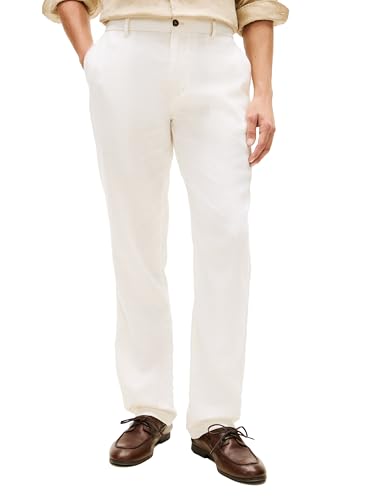
The verified Tommy Hilfiger Men’s Denton Straight Linen Chino listing is a useful reminder: “chino” and “linen” can describe the same product. Its title identifies a straight style and linen wording, but does not establish the exact fiber percentage in our retrieved evidence. It should therefore be evaluated as a specific listing, not used to claim all chinos share a composition.
For a chino-like replacement, investigate the waistband, fly, belt loops where actually documented, pocket openings and leg shape. Compare the rise and dimensions against your existing pair. For a deliberately more casual alternative, a linen drawstring style may make sense, but that is a change in garment construction as well as material.
Warm weather: judge the layers you will actually wear
It is tempting to rank the two fibers by a universal cooling score. That would oversimplify the decision. A lined pant, a dense cloth and a close fit create a different wearing arrangement from an unlined roomy trouser, regardless of the large word at the front of the product title.
Consider a practical example: you are comparing relaxed cotton trousers you already like with an unfamiliar lined linen model. The linen label does not prove the new outfit will feel less warm. Ask about the lining, inspect the cut and decide whether the extra layer fits your preferences. Conversely, a roomy unlined linen pair may be worth trying if your current cotton trousers have a fit or weight you dislike.
There is laboratory research on linen and other fibers, but it should not become a product promise. The CETELOR study overview describes comparable knitted samples, not the woven Amazon trousers in this catalog. It cannot establish a temperature benefit for a particular pair. Our hot and humid weather guide focuses on choosing the complete garment instead.
Decide how much visible texture belongs in your outfit
Some people want linen because the surface and relaxed appearance are part of the attraction. Others want trousers that resemble their current neat cotton pair as closely as possible. Both are reasonable goals. Look at close-up images for texture and full-length images for the shape, while remembering that lighting and styling influence the presentation.
A casual drawstring pant may fit naturally into an outfit with an untucked shirt. A dress-oriented linen blend may better match the clean front you expect from chinos. The Perry Ellis Portfolio Essentials Men’s Linen Blend Dress Pants are explicitly described as dress pants in the verified title. That makes them relevant to investigate for this role without establishing that they meet any employer’s dress code.
Creasing preferences also deserve honesty. If you will be dissatisfied when trousers show folds after sitting, do not choose solely from a freshly styled product image. Cotton garments vary in how they crease too. Compare your real tolerance for a lived-in appearance with the care effort you are prepared to make, rather than expecting either fiber name to promise a permanently pressed finish.
Opacity and pockets can outweigh the material debate
Coverage is a property of the actual cloth, fit and construction. Light-colored cotton can need careful evaluation, just as linen can. A fiber label alone cannot tell you how visible a pocket bag or underlayer will be in daylight. Check the exact color and size, not only a darker variant shown elsewhere on the same listing.
Pockets introduce another practical comparison. If you regularly carry a phone, assess whether the garment’s pocket shape and the added weight suit the way you use it. A title saying “pockets” does not establish depth, fastening or security. A relaxed drapey leg and a structured trouser may carry the same object differently, but that needs a garment-specific assessment.
The Hooever Women’s Button Up Cotton Linen Trousers illustrate why a mixed-fiber candidate should not be excluded simply because the question began as linen versus cotton. Their title names both fibers and a button-up wide-leg design. If those garment features match your needs, the pair is worth comparing on its own merits rather than forcing it into one side of a binary debate.
Compare the laundry routine before the first outing
You may know exactly how your existing cotton trousers respond to your normal routine. An unfamiliar linen pair introduces new instructions, and those instructions should be read before you decide it will be easy to maintain. Do the same when buying a different cotton garment; familiarity with the fiber is not a substitute for the product label.
The FTC’s care-label explanation addresses the complete garment, including components. Lining, decoration and waist construction can make two seemingly similar pairs require different treatment. There is no universal rule that cotton can go through any wash-and-dry cycle while linen cannot.
For a fair ownership comparison, ask three questions. Can you follow the cleaning instructions at home? Do you have the space or equipment for the required drying method? Will you realistically do any pressing needed for the appearance you prefer? A pair that fits your habits may be a better choice than one whose material you admire but whose routine you avoid.
Three decisions with different sensible answers
Replace a familiar chino
For replacing an everyday cotton chino, begin with a similarly structured linen candidate and compare measurements and waistband details. The Denton linen chino and a linen-blend dress pant offer different routes to investigate. Avoid assuming either will reproduce the fit of a pair from another brand simply because the size label matches.
Add a different casual silhouette
For adding a relaxed warm-weather option, compare an all-linen drawstring design such as the verified Amazhiyu Men’s Pure Linen Loose Drawstring Pants with the casual trousers you already enjoy. Here the goal may be a different appearance and roomier shape, so exact duplication is unnecessary. Keep your requirements for coverage, pockets and care, however.
Keep a blend on the shortlist
For someone undecided about either fiber, a clearly described cotton-linen blend can be a legitimate third route. Confirm the percentage if it matters to you and avoid treating the blend as an automatic best-of-both-worlds formula. The more detailed pure linen and blend comparison handles that composition decision without changing the basic rule: judge the complete pants.
FAQs
Are linen chinos a contradiction?
No. Linen describes fiber content or fabric wording, while chino describes a trouser style. A verified listing can use both terms. Check the full composition and construction instead of assuming that every chino is entirely cotton.
Should I replace all my cotton summer pants with linen?
Only if the individual replacements improve your wardrobe. Keeping a familiar cotton pair and adding one linen option gives you different appearances and routines to choose from. There is no requirement to use one fiber exclusively for a season.
Can I compare linen trousers with cotton sweatpants to predict stretch?
That comparison combines different fabric structures and garment designs. The give you enjoy in a particular knit cotton pant does not establish how a woven linen or cotton trouser will move. Compare documented stretch and finished measurements on the exact alternatives.
Final Verdict
Keep the cotton pair that already works, and use its strengths as your shopping checklist. Choose linen when a specific pair adds the texture, shape or wardrobe role you want. If the new trousers lose essential fit, coverage or manageable care, changing fibers has not improved the purchase.