The washer has finished, the waistband is damp, and there is no obvious place to put the trousers. That is when a convenient dryer button can become an expensive guess. Drying deserves its own decision because permission to machine wash does not necessarily include permission to tumble dry.
You need two things before moving the pair: the garment’s actual drying instruction and a setup that follows it. Choosing between a rack, a hanger, a flat surface and a tumble cycle is easier once those are considered separately.
Quick Answer
Linen pants can go in a dryer only when their exact care instructions allow it, using the permitted process. Other pairs require natural drying, sometimes flat or in shade. Read the drying instruction independently of the wash setting. Support wet fabric, arrange seams without stretching, and check the waistband, pockets and hems before putting the trousers away or packing them.
As an Amazon Associate I earn from qualifying purchases.
Read the drying instruction as its own instruction
The GINETEX care-symbol guide distinguishes tumble drying from natural drying and separates flat, line and shade arrangements. A wash temperature is therefore not your dryer setting, and an iron symbol does not independently approve tumbling. Read written warnings alongside symbols rather than selecting the one that seems most convenient.
If the label permits a tumble process, match its restriction to your appliance manual. Cycle names vary. A setting with linen in its name cannot know whether your pants include a lining, elastic, a bonded detail or a blend with different requirements. Likewise, a low setting is meaningful only in relation to the garment’s permission and the appliance’s controls.
An unreadable label calls for clarification, especially with a new pair you have never laundered. Check the original product details and contact the manufacturer with a style identifier. Using the care routine from a visually similar listing creates a gap in the evidence. Meanwhile, plan an alternative outfit instead of speeding an uncertain process with heat.
Choose a place before the pants become a wet bundle
Natural drying still needs a workable environment. A crowded rack can leave large areas folded against each other; a narrow support can place a strong bend across the knees. Think about where the waistband, crotch seam and doubled hems will sit. Those areas deserve access for inspection rather than being hidden underneath several other items.
If the garment calls for flat drying, use a clean surface or suitable rack that supports it in its intended shape. Align the legs, spread the waistband naturally and avoid pulling one corner farther than the other. A towel may help protect a suitable surface, but it should not leave the trousers sitting indefinitely against accumulated moisture. Check both sides as the process progresses.
For permitted hanging or line drying, choose supports that hold the garment without making it drag or concentrating all its weight on a small, delicate area. Clips can leave marks where they press; a folded hanger arrangement introduces a fold. Those are practical tradeoffs, not proof that one support is always wrong. Choose according to the garment’s instruction, available space and the finish you want afterward.
When tumble drying is explicitly allowed
Separate the question of permission from the question of preference. You might have an approved tumble option but still choose natural drying because that suits your routine. Conversely, a household without adequate rack space may specifically shop for pants with documented tumble care. Both are legitimate choices; neither follows automatically from a pure-linen or linen-blend title.
Use the approved setting with a compatible load and check any special removal instruction. The Alliance’s linen care advice cautions against excessive drying heat. That supports taking the restriction seriously, not inventing a standard time that works for every dryer and garment.
If directions tell you to remove the garment slightly damp for finishing, distinguish that from storing it damp. It still needs to reach a dry, ready-to-store condition through an approved next step. Do not keep adding short bursts of heat simply because a thick waistband feels different from a thin leg panel. Pause, inspect and use the permitted process rather than improvising a more aggressive one.
Arrange the shape; do not try to resize it
When trousers emerge from washing, twisted legs or folded pockets can make the pair look worse than it is. Open those areas with supported hands. Bring side seams into a sensible alignment and release hems that have rolled inward. You are removing accidental bunching, not stretching the fabric to meet an ideal inseam.
An elastic waistband needs particular restraint. Holding up the entire wet garment by opposite ends of the waistband while tugging is not a useful measurement or a reliable recovery technique. A drawstring also is not designed to carry the wet pair as if it were a hanging loop. Support the garment body while repositioning it.
If the pair already seems smaller, finish the permitted process and compare it calmly when ready to evaluate. The dedicated shrinkage recovery guide explains why forceful wet stretching can create a different problem. Drying should preserve the intended arrangement of the garment, not become an uncontrolled alteration session.
A drying-space comparison for three real styles
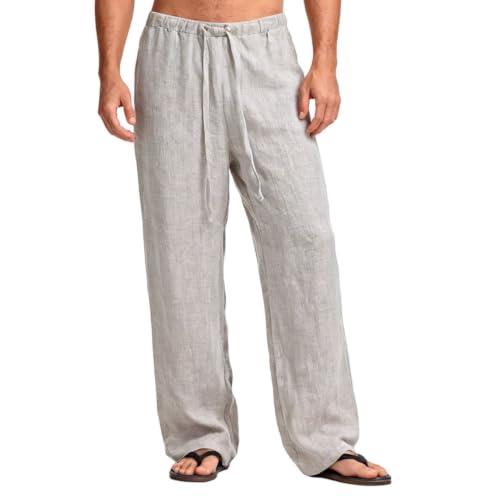
Consider Amazhiyu Men’s Pure Linen Loose Drawstring Pants. The listing’s pure-linen description answers a composition question. It does not tell us the brand’s permitted drying method for the selected variant. The loose legs suggest checking that your chosen support can arrange the full garment without packing it into a small space; this is a setup consideration rather than a claim about its drying speed.
Sampeel Women’s Drawstring Palazzo Linen Pants combine a wide-leg listing with an elastic-waist description. If the exact label permits natural drying, the waistband and broad panels need their own room on the rack. Do not read an elastic-waist feature as evidence that the whole garment can be stretched, nor read tall wording as a reason to hang it under tension.
Cubavera Men’s Flat-Front Linen-Blend Dress Pants bring presentation into the decision. If you want a defined trouser line, consider how the garment will be supported and finished after its approved drying process. None of these titles verifies a dryer setting. Compare care evidence on the actual listing before choosing the pair that will fit your laundry space.
How to judge readiness without a promised drying time
A clock alone cannot tell you the trousers are ready. Room conditions, garment construction, how water was removed and the arrangement all affect the practical schedule. Instead, inspect the parts that are easiest to overlook: inside pocket bags, seam intersections, the waistband channel and turned hems. A dry-feeling outer leg is only one part of the garment.
Move the pants carefully to check concealed folds. If the permitted arrangement leaves one section doubled, ensure that section is assessed before the pair goes into a drawer. Avoid draping other garments over the trousers midway through drying; that changes the setup you are trying to evaluate. Give each item enough accessible space for a meaningful check.
For travel, work backward from when the pants must be packed rather than starting a wash just before departure. There is no universal overnight guarantee. If your lodging or home offers poor drying conditions, a second clean pair is a more dependable plan than assuming linen will always be ready first thing in the morning.
Troubleshooting the arrangement instead of blaming the fiber
A sharp bar mark across the legs may reflect where they rested. Before the next wash, choose a different permitted support or distribute the fabric more carefully. If the waistband is still damp while the legs feel ready, give that area access rather than declaring the whole item finished. These observations help improve the setup without changing the care instructions.
Persistent twisted seams, unusual puckering or a major change in length deserve a separate assessment. Record the wash and dry processes you used. Do not immediately repeat them hotter to flatten the result. Problems in construction or dimensional change will not necessarily disappear with more intensive drying.
Finally, separate a naturally relaxed finish from a failure. Some wearers are happy with trousers straight from a correctly used rack; others prefer pressing. The iron-or-steam guide covers permitted finishing methods. Your preferred appearance can influence which model you buy next, but it should not override the instructions for the pair already in your hands.
FAQs
Does a cotton-linen blend automatically permit tumble drying?
No. A fiber combination does not establish a complete garment’s drying instructions. Check the selected model and variant, including warnings relevant to any additional components. A blend may fit your routine, but that needs evidence from the care directions.
Can I dry pants over a radiator instead of in a dryer?
Do not assume an improvised heat source is equivalent to the approved method. If the label calls for natural drying, follow its arrangement and any shade instruction. A radiator also gives you less useful control over how different sections contact heat.
Why does one trouser leg dry sooner than the other?
Check whether one leg is folded behind the other, pressed against a towel or shaded by another garment. If the care instructions permit repositioning, rearrange the supported pair so both legs have comparable exposure. Uneven drying in one setup does not establish a fabric defect or justify switching to unapproved heat.
Final Verdict
The best drying method is the one the label permits and your home can carry out reliably. Set up the space before washing, support the whole pair and judge completion by the actual garment rather than a timer. If dryer compatibility matters every week, verify it before buying instead of treating it as an assumed benefit of linen.