A lunch spill invites an immediate response, but the nearest hand soap, wipe or bottle is not automatically the right response. The first useful action is to identify the stain and the garment’s limits before making the marked area larger, wetter or chemically more complicated.
Linen pants can include different blends, dyes, linings and closures. This guide provides a stain decision process for that finished garment. It does not offer one aggressive recipe for everything from cooking oil to ink.
Quick Answer
Identify the substance, remove loose excess without grinding it into the cloth, and check the garment’s washing and treatment restrictions. Choose a stain product that is compatible with both the stain and the complete pair, following its directions and any testing requirement. Inspect the result before additional heat or finishing. Unknown stains, delicate construction and persistent marks may warrant professional assessment before more treatment.
As an Amazon Associate I earn from qualifying purchases.
Preserve the information while the spill is fresh
Note what contacted the trousers, where it landed and whether anything has already been applied. Coffee with milk is a different history from plain water; a sauce may contain several ingredients. You do not need a chemistry degree to preserve that information. A simple description helps you select an appropriate product or explain the stain to a cleaner.
Lift loose solids carefully rather than smearing them across the surrounding cloth. For a liquid, use clean absorbent material to take up excess gently when appropriate, avoiding forceful rubbing. Keep the marked area from transferring onto another part of the garment or onto clean clothing. The immediate goal is containment, not a promise of complete removal at the restaurant table.
If you are away from home, resist adding a succession of products from the bathroom counter. An untreated identifiable spot can be easier to assess than a larger patch containing the original stain, hand soap, fragrance and a random cleaner. Take a photograph if it helps record the location and the garment’s condition before further handling.
Match the treatment to two sets of directions
Read the clothing care label and the proposed stain product’s directions together. A product that addresses oil still needs to be suitable for the garment. A care label that allows washing does not automatically approve bleach, solvents or prolonged soaking. Different instructions apply to different actions, so do not let one permission stand in for the rest.
The GINETEX care guide distinguishes bleaching and professional-care restrictions from ordinary washing instructions. Use those distinctions when evaluating a treatment. If a label or product warning conflicts with the intended method, stop and seek an alternative rather than reducing the quantity and assuming that resolves the conflict.
Where testing is directed, use the specified inconspicuous area and process. Check for a visible change as instructed before treating a prominent panel. A successful small test is useful but limited; it does not prove that every longer soak, larger dose or repeated application will be acceptable. Keep the main treatment within the directions that were actually evaluated.
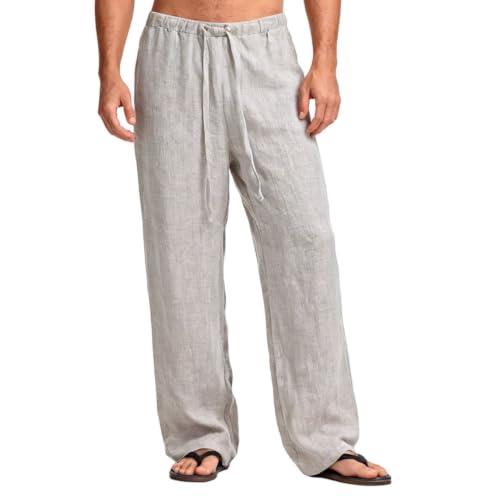
Amazhiyu Men’s Pure Linen Loose Drawstring Pants have an explicitly pure-linen listing. That does not establish whether the selected dye or any attached component permits a particular remover. Check the real label even when the silhouette appears simple. An adjustable closure does not make the rest of the garment chemically uncomplicated.
Oil and greasy food: avoid treating the name linen as a recipe
Identify whether the mark is mainly grease, a colored sauce or a mixture. The American Cleaning Institute’s stain guide treats grease and oil as a distinct category, with compatible pretreatment followed by laundering. Its broad advice still needs to fit the trousers’ own restrictions.
For washable pants, choose an appropriately labeled product rather than assuming dish detergent or a household degreaser is suitable for all garment components. Follow the application and laundering sequence, including any limits on how long the product may remain. Do not use a large dose to compensate for uncertainty about what is in the stain.
After the permitted process, inspect the original location. Greasy-looking areas can be harder to assess when the surrounding cloth is damp, so do not rush to iron the pair for the next outing. If the mark remains, consult the product’s next-step instructions or a cleaner. Repeatedly adding stronger products can introduce discoloration as a second problem.
Drinks and mixed food need their own identification
A pale splash and a strongly colored spill may look similar while wet but call for different product guidance. Note whether the drink contained milk, fruit or other ingredients. The purpose is to narrow the treatment choice, not to create an exhaustive home recipe for each ingredient combination.
Keep the trousers’ permissions in view if a stain reference recommends soaking or a particular water treatment. A general food-stain instruction cannot override a do-not-wash garment or an incompatible trim. If the label limits home care, contain the spill gently and take the pair for assessment with a clear account of what happened.
Avoid scrubbing a small spot until its surface visibly differs from the rest of the leg. A successfully removed color with an abraded patch is not necessarily a satisfactory result. Work within the treatment directions and stop if the cloth, dye or seam responds unexpectedly. Preserving the garment can be more valuable than pursuing instant disappearance of the mark.
Faleave Women’s Cotton Linen Palazzo Pants identify a blend. Do not select a stain recipe for pure linen and assume it covers the combination. Their broad panels also make a local change conspicuous if a treatment affects color unevenly; that is a reason to preserve the directions and inspect the result, not a claim that this model stains more easily.
Mud, ink and unfamiliar marks are not interchangeable
Mud carries loose material that can spread if handled carelessly. Remove accessible excess without grinding it into the weave, then use a care-compatible mud treatment rather than borrowing a grease routine. Inspect cuffs and seam folds where material can remain hidden. A muddy hem may need attention on both surfaces, not just the side visible when worn.
Ink and paint require better identification before choosing a solvent or remover. A pen brand or paint container can provide useful information for a specialist or product instructions. Do not assume alcohol, nail-polish remover or another readily available solvent is appropriate for dyed linen trousers. The garment’s professional-care restrictions also matter.
For an unknown mark discovered after storage, begin with observation: color, location, texture and the last known use. If you cannot narrow the cause, professional advice can be preferable to a sequence of incompatible guesses. General yellowing across white trousers belongs in the discoloration assessment, which considers a different pattern from one fresh spill.
Evaluate one attempt before planning the next
Record the product, application time and laundering process used. Look at the marked area under consistent light and compare it with surrounding fabric. If the original stain is reduced but a ring or pale patch appears, do not describe that as uncomplicated success. The next decision should address the observed result, not simply repeat the original plan.
Avoid moving straight from an incomplete treatment to a hot finishing session. Check the stain first and follow the treatment directions for inspection and drying. The separate washing guide covers the full load workflow; the stain step needs to be resolved within that workflow rather than forgotten once the machine starts.
Take unresolved stains to a cleaner with the garment label and your treatment history. Tell them everything that has been applied, including improvised products. Be prepared for limits: removal may be uncertain, and preserving color or construction may rule out a more aggressive process. An honest assessment is more useful than a guaranteed restoration claim made without seeing the pants.
Cubavera Men’s Flat-Front Linen-Blend Dress Pants may be chosen for occasions when appearance matters particularly. Before treating an event pair yourself, consider whether you can accept the uncertainty and have time for a professional assessment. The title does not verify a lining or its care, so inspect the actual construction rather than inferring it from the word dress.
FAQs
Can I use the same stain pen on every linen blend?
Only when its directions and the garment’s restrictions establish compatibility. Different dyes, components and fibers can change the decision. Check any testing instruction and do not assume that a product suitable for one pair is suitable for another simply because both titles contain linen.
What should I tell a cleaner about a treated spot?
Describe the original substance if known, when it happened, and every product or process already used. Include whether the area was washed, dried or pressed. Bring the care label and point out any visible change that appeared after your own treatment.
Should I keep treating a stain until it is completely invisible?
Not without evaluating the garment after each directed attempt. Stop if color, texture or construction changes unexpectedly. A remaining mark may require professional advice, and some stains cannot be removed to the original appearance without unacceptable risk to the surrounding cloth.
Final Verdict
The best stain response preserves options: contain the spill, identify it, respect the garment’s restrictions and use one compatible treatment correctly. Oil, food, mud and ink should not share a guessed recipe. When the cause or construction is uncertain, bring a clear treatment history to a professional instead of making the trousers a test surface for successive products.