A narrow-looking trouser can be exactly the shape you want and still be wrong for your measurements. A roomy pair can give the visual volume you enjoy without being the best choice for every setting. COOFANDY’s slim dress and loose harem listings make that distinction worth considering before you choose a size.
These two options do not merely represent a tighter and looser version of one documented garment. They have different descriptions of shape, waist treatment and material. Compare them as separate designs, using the outline you want and the movement room you need as two requirements that must both be met.
Quick Answer
Choose COOFANDY’s slim-fit linen dress listing as a starting point for a narrower trouser outline, provided the actual measurements allow comfortable movement. Choose the cotton linen drawstring harem listing when a deliberately loose shape and a stated waist tie are priorities. Do not size down the harem style to imitate slim trousers or size up a slim design indefinitely to create a loose one.
As an Amazon Associate I earn from qualifying purchases.
Set the silhouette before the size
Look at a complete outfit you already enjoy. Does the trouser create a relatively narrow line under the shirt, or do you prefer visible volume through the leg? That preference helps determine the more sensible model to investigate. It does not establish what size you should buy within that model.
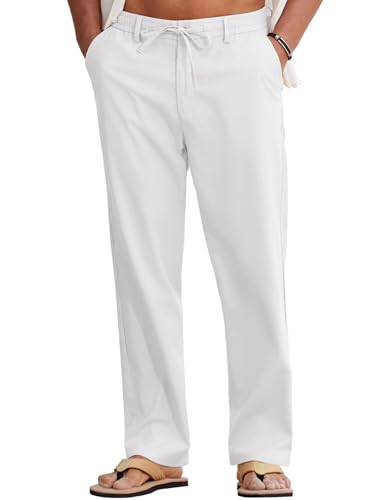
The COOFANDY slim-fit dress-pant listing explicitly identifies slim fit and a linen dress-pant format. The title does not document its fly, waistband adjustment or exact leg opening. Start with the narrower design direction, then obtain the details that determine whether it can work on you.
The COOFANDY cotton linen harem listing explicitly identifies cotton linen, a drawstring waist and a loose harem format. It also uses elastic wording. That does not establish a measured stretch property throughout the cloth or quantify the rise and leg volume. The design direction is looser; the specific pattern remains a product-level question.
Avoid using size as a substitute for that first design choice. A small harem pant may retain its characteristic proportions while becoming too tight in one area. A large slim pant may create a loose waist without giving you the volume distribution of a deliberately loose design. Select a shape you want before solving the fit within it.
Examine the upper leg before the ankle
Slim outlines often draw attention to the lower leg in photographs, but the seat and thigh are critical to whether the trousers work in daily use. A visually neat hem cannot compensate for strain when you sit. Start with the body areas that need room, then see whether the design still creates the outline you prefer.
Compare the waist, rise, seat and thigh measurements with a useful reference pair. If you usually struggle with upper-leg room, the thigh-fit guide helps separate that issue from an overly large waist. Do not infer that the slim model solves or worsens it by a fixed amount without the actual dimensions.
The loose harem description gives a reason to investigate a roomier design, but it is not a guarantee of a particular crotch depth or maximum thigh space. Harem is used for a range of silhouettes. Confirm the rise and shaping rather than assuming the exaggerated proportions of a different garment you have seen elsewhere.
During fitting, pay attention to where the fabric has to travel as you move. Sit, stand and take a comfortable step. Notice whether the trousers pull from the waist, restrict the upper leg or leave excess fabric where you do not want it. Evaluate each model against its intended outline instead of demanding that both look identical on your body.
Two fictional size decisions show the difference
Suppose one shopper likes a narrow trouser line but finds that a candidate’s thigh measurement is smaller than a comfortable reference pair. Selecting a bigger waist may increase thigh room, but it may also change several other proportions. The useful next step is to compare the adjacent size’s full measurements, not assume a one-size increase solves the issue.
If no size provides the needed seat and thigh room without an unsuitable waist or rise, the design is a poor candidate for that shopper. Choosing the loose model could be sensible if they also enjoy its look. Otherwise, a different straight or tapered design may better preserve the original style goal.
Now suppose another shopper wants an intentionally roomy leg and is tempted to order a smaller harem size because the garment measurements look larger than their body. Those differences may be part of the design’s intended ease. Removing them without understanding the pattern can undermine the very loose shape that attracted the shopper.
The lesson is not that one person should wear slim and another should wear harem. It is that garment dimensions and style intention need to be interpreted together. Body size alone does not prescribe a silhouette, and a silhouette label alone does not determine comfort.
Plan the slim option around a controlled outline
If you like the slim model’s design direction, begin with a shirt whose volume you already understand. A neat untucked shirt can keep the outfit simple; a tucked shirt changes the emphasis at the waist. Before planning the latter, inspect the actual waistband and closure because the dress-pant title does not specify every detail.
Add the shoes you expect to use and consider the lower-leg relationship. A narrow hem and substantial shoe create one balance; a lower-profile shoe creates another. The right choice is the one you like and can wear comfortably, not a rule that slim linen trousers must be paired with a particular category of footwear.
If you plan to use the trousers for a dressed occasion, assess the complete garment and the actual requirements. The word dress describes the listing’s intended presentation; it does not establish suitability for every office, ceremony or venue. A successful casual outfit and an appropriate event outfit are separate checks.
Give the loose option room to look deliberate
For the drawstring harem model, decide whether the waist tie will be visible. A shorter or tucked top can reveal that feature; a longer top can place more emphasis on the leg. Try the proportions you actually prefer instead of assuming loose trousers always require a tight shirt.
An overshirt can work if you enjoy the volume, but consider where its hem falls relative to the widest-looking part of the trousers. You may prefer to open it over a simpler top or choose a shorter layer. These are adjustments to a particular outfit, not rules about which body shape is permitted to wear a roomy pant.
Check the lower-leg finish in the listing before planning a shoe combination around it. The harem title does not verify a particular cuff circumference or hem length. If you want a visible ankle, determine whether the chosen size supplies that result without moving the waistband away from its intended position.
The men’s shirt guide and men’s shoe guide offer broader combinations after these model-specific questions are settled. Their styling ideas should be applied to the garment you receive, not to an imagined generic harem outline.
Material wording is an asymmetry, not a contest
The harem listing names cotton and linen. The slim listing names linen without an explicit pure-linen percentage in the title. That means the information available about their fibers differs; it does not establish that one is all linen and the other is not.
Do not compare cooling, softness or creasing as though the two fabrics have been identified and tested side by side. No shared cloth specification or performance result is available here. If composition is a deciding requirement, read the fuller information for both before investing time in an outfit comparison that cannot satisfy your material preference.
Likewise, elastic wording in the harem title should not be transformed into a quantified stretch benefit across the leg. A waist construction and a textile’s stretch behavior need separate evidence. Choose enough movement room in the starting fit rather than counting on an undocumented stretch property to rescue a close size.
Keep the better candidate only if it serves its intended job
Once a pair is available to evaluate, examine it with the clothes and movements that justified the purchase. For the slim candidate, make sure the desired narrower outline does not require tolerating restriction. For the loose candidate, ensure that you enjoy the volume instead of constantly adjusting or concealing it.
The first try-on guide helps diagnose issues before alteration. Some problems are local, such as a hem that needs finishing at a different length. Others involve the waist, rise and seat together. Do not commit to reshaping an entire trouser just because one model name initially sounded right.
If neither pair meets the combination of fit and style, keep the original goal clear while considering another cut. Rejecting two candidates is useful progress when it prevents buying a silhouette you do not enjoy or a size that only works while standing still.
FAQs
Can I buy the loose harem pants smaller for a slim appearance?
That is not a dependable way to obtain a slim pattern. Reducing the size changes multiple dimensions and may create tightness while preserving the harem design’s volume distribution. If a narrower outline is the goal, investigate a garment designed for it and compare its measurements to your needs.
Does the slim dress listing have more linen than the harem listing?
The available descriptions do not establish that comparison. The harem title names cotton linen, while the slim title says linen without a stated percentage. You need the complete fiber disclosures to compare proportions; the shorter material wording does not imply a purer fabric.
Is the harem pair automatically better for a long flight?
The loose description may make it worth investigating, but the actual waist, rise and seated fit still matter. The title supplies no travel comfort test. Try the pair seated with your expected top and carry arrangement before treating roomy styling as proof that it suits a particular journey.
Should I choose the same COOFANDY size in both models?
Only if each model’s own size information supports that choice. Shared branding does not document identical patterns or measurement systems. Compare the relevant dimensions separately, especially through the seat and thigh, rather than assuming that a size label transfers unchanged between slim and loose designs.
Final Verdict
Choose the slim dress model when its narrower design is the look you want and the actual size provides room to move. Choose the drawstring harem model when you actively want a looser shape and a stated waist tie. Let neither option win merely because the other sounds less comfortable.
A useful comparison preserves both requirements: the outline you enjoy and a fit you can live in. When a candidate cannot deliver both, change the candidate rather than trying to turn a smaller harem pant or a larger slim pant into an entirely different pattern.